ServicesWisdom Teeth Removal
Wisdom Teeth Removal in Prosper
Wisdom teeth that ache, trap food or push on the molars in front of them usually cause more trouble the longer they stay. We map each tooth before we touch it, numb you well and walk you through recovery so you know what each day should feel like.
When Wisdom Teeth Should Come Out
Wisdom teeth are your third molars, and in most mouths there just is not enough space left for them by the time they arrive. Some erupt straight and never cause a problem. Others stay trapped beneath gum tissue or bone, tilt toward the neighboring molar, or only partly emerge and leave a pocket of gum where bacteria settle in.
Having a wisdom tooth is not, by itself, a reason to remove it. When the tooth is healthy, easy to clean and not pressing on anything, we will say so and simply check it at your regular visits. When it is behind an infection, decay or pressure on the second molar, removal is usually the more straightforward choice.
One small team cares for you from your first scan through your follow-up visit. The person who planned your treatment is the same one who explains it to you and fields your questions once you are healing.
What Your Wisdom Tooth Treatment Includes
Imaging before any decision
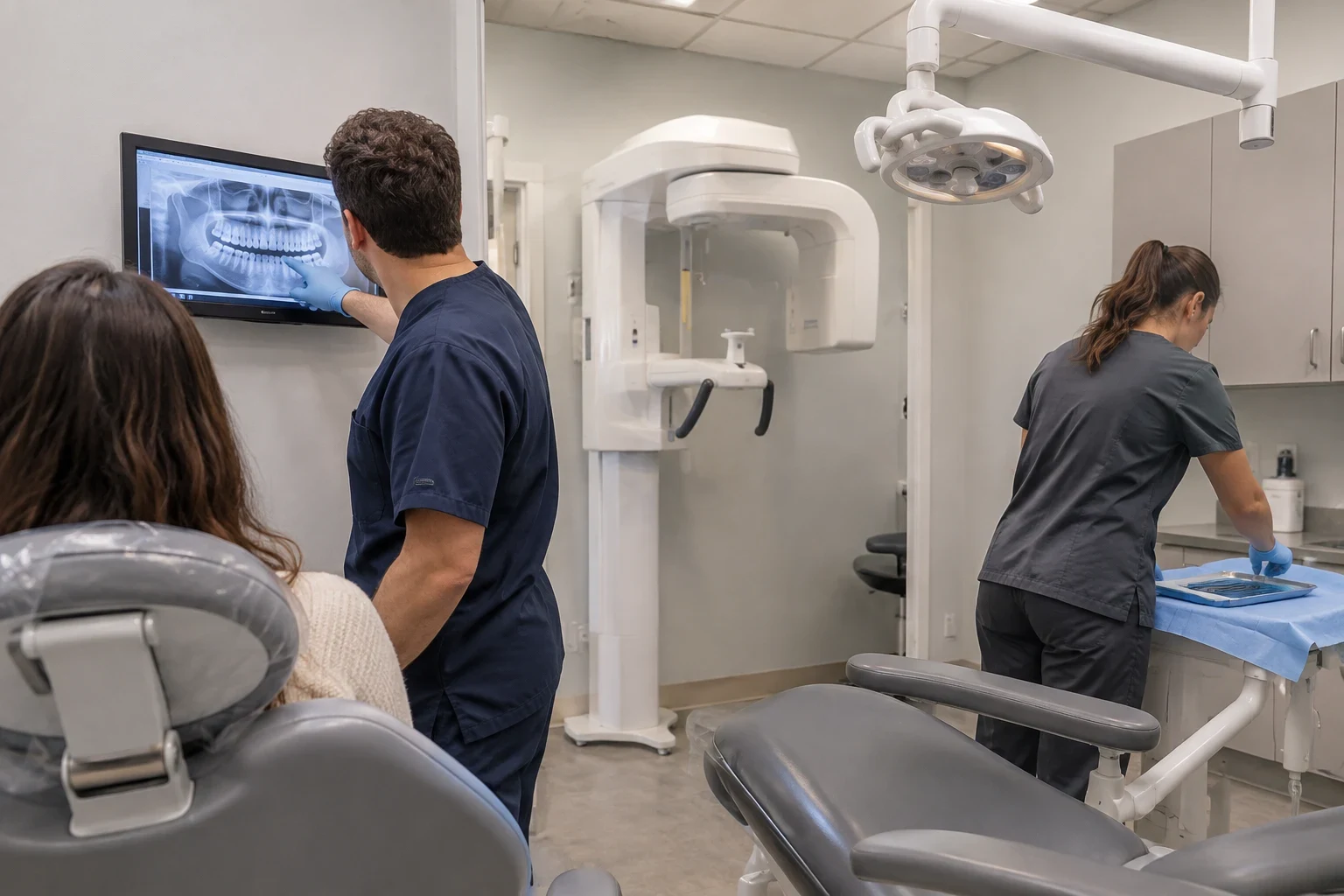
Digital X-rays tell us how deep each tooth sits and which way it points. If a lower tooth is close to the jaw nerve, we take a CBCT scan, a three-dimensional image that lets us work out a safe path before removal day.
A written treatment plan
Your plan names the teeth we suggest removing, the reason for each and what the removal will involve. Take it with you and decide in your own time.
Local anesthetic and gentle care
We numb the area carefully and confirm it is completely numb before starting. Expect a feeling of pressure rather than sharp pain, and raise your hand any time you want a break.
Careful removal and closure
A tooth held in bone is often taken out in smaller pieces, which puts less strain on your jaw. We add stitches where they help and place gauze before you head out.
Recovery instructions you can follow
You go home with written aftercare covering swelling, what to eat and when gentle rinsing can begin. It also lists the signs that mean you should give us a call.
A follow-up check
We check how each socket is closing and take out any stitches that need removing.
Signs Your Wisdom Teeth Need Attention
Swollen gum at the back of the mouth
A sore, puffy flap of gum over a tooth that has only partly come through is often infected. It usually keeps flaring up until the tooth is removed.
Aching that reaches your ear or jaw joint
An impacted tooth pressing on its neighbors can show up as what feels like an earache or a tender jaw. When that keeps returning, imaging tells us whether a wisdom tooth is to blame.
Food trapped behind the last molar
A tooth your toothbrush cannot reach well builds up plaque. Over time that can cause decay in the wisdom tooth and in the healthy molar next to it.
Bad taste or breath that will not clear
A lingering unpleasant taste around the back teeth may mean bacteria are trapped there, or that a mild infection is sitting under the gum.
Trouble opening wide
If your jaw feels stiff when you open, particularly along with swelling, it is worth having it looked at soon.
How Wisdom Teeth Removal Works With Us
- 1
Focused evaluation
First comes a careful exam and a set of digital X-rays to see where each wisdom tooth sits. When a root looks close to the jaw nerve, a CBCT scan gives us the full 3D picture, and we talk you through the images in plain terms.
- 2
Planning your visit
We settle which teeth will be removed, how long you will be with us and how to get ready. Bring a ride if you prefer, have a light meal beforehand and keep the next day or two quiet.
- 3
The removal appointment
Once you are numb, we loosen each tooth, dividing it into sections if bone is holding it, and close the area. Many patients find that most of the appointment is setup and only a small part is the removal itself.
- 4
Recovery and check-in
Swelling tends to be greatest on day two or three and then settles. You can phone the same people who treated you with questions while you heal, and we schedule a visit to make sure everything is closing the way it should.
What Shapes the Cost of Wisdom Teeth Removal
Your fee mostly comes down to where each tooth sits and how it is angled, so we set the price after we have seen your imaging, not over the phone. The treatment plan prices every tooth on its own line, so you can see exactly what you are paying for. We are in-network with 15+ major PPO dental insurance plans, and we can look up your benefits ahead of your visit.
- How many teeth come out
- One tooth costs less than four. Taking out several at the same appointment often means you heal once instead of twice.
- Depth of impaction
- A wisdom tooth that has broken fully through the gum is removed much like an ordinary extraction. A tooth still under gum tissue, or held partly or completely in bone, needs more time and a more careful approach.
- Roots and the nearby nerve
- Hooked roots, or roots that sit close to the lower jaw nerve, mean we want 3D imaging first and a slower pace during removal.
- Insurance and ways to pay
- Many PPO plans help cover surgical extractions. If you have no insurance, our In-house Membership Plan for uninsured patients can bring the cost down. You can also spread payments out with 0% interest financing for up to 24 months, and seeing if you are preapproved leaves your credit score untouched.
Wisdom Teeth Removal Questions
Something not covered here? (972) 635-4707
Will it hurt?
Once the local anesthetic takes hold, you should feel pushing and movement rather than pain. Expect some soreness for a few days afterward, which most patients handle well with the medication plan we give you. Ice during the first day and plenty of rest help more than people expect.
How long is recovery?
Most people are back at work or school within two to four days. Stick with soft foods for roughly a week while the gums continue to close over the following few weeks. Lower teeth that were set deep in bone tend to take a bit longer to settle than upper ones.
Do all four wisdom teeth have to come out?
Not necessarily. We suggest removal only for teeth that are causing trouble now or are clearly headed that way. A wisdom tooth that is healthy and sits in a good position can stay put, and we will check on it during your regular visits.
What is dry socket and how do I avoid it?
Dry socket is what happens when the protective blood clot leaves the socket too soon and the bone underneath is exposed, which can be quite painful. For the first several days, skip straws and smoking, and do not spit forcefully. Soreness should ease a little each day, so if it starts climbing again around day three or four, give us a ring and we will get you in to look at it.
Is wisdom teeth removal different from a regular extraction?
A wisdom tooth that has fully come in can be removed the same way as most other teeth. An impacted one usually needs a small opening in the gum, and sometimes the tooth is taken out in pieces. For other teeth that need to come out, see our Extractions page.
Find Out What Your Wisdom Teeth Are Doing
At your focused evaluation we examine your mouth, take digital X-rays and add a CBCT scan only if your roots need a closer look. You leave with a treatment plan in hand and a straight answer on whether removal makes sense, before you commit to anything.