ServicesRoot Canals
Root Canals in Prosper, TX
A throbbing tooth or a swollen gum usually means the nerve inside is inflamed or infected. A root canal clears that out and lets you keep your own tooth. We numb you well, explain each step and keep the same small team with you from first visit to final crown.
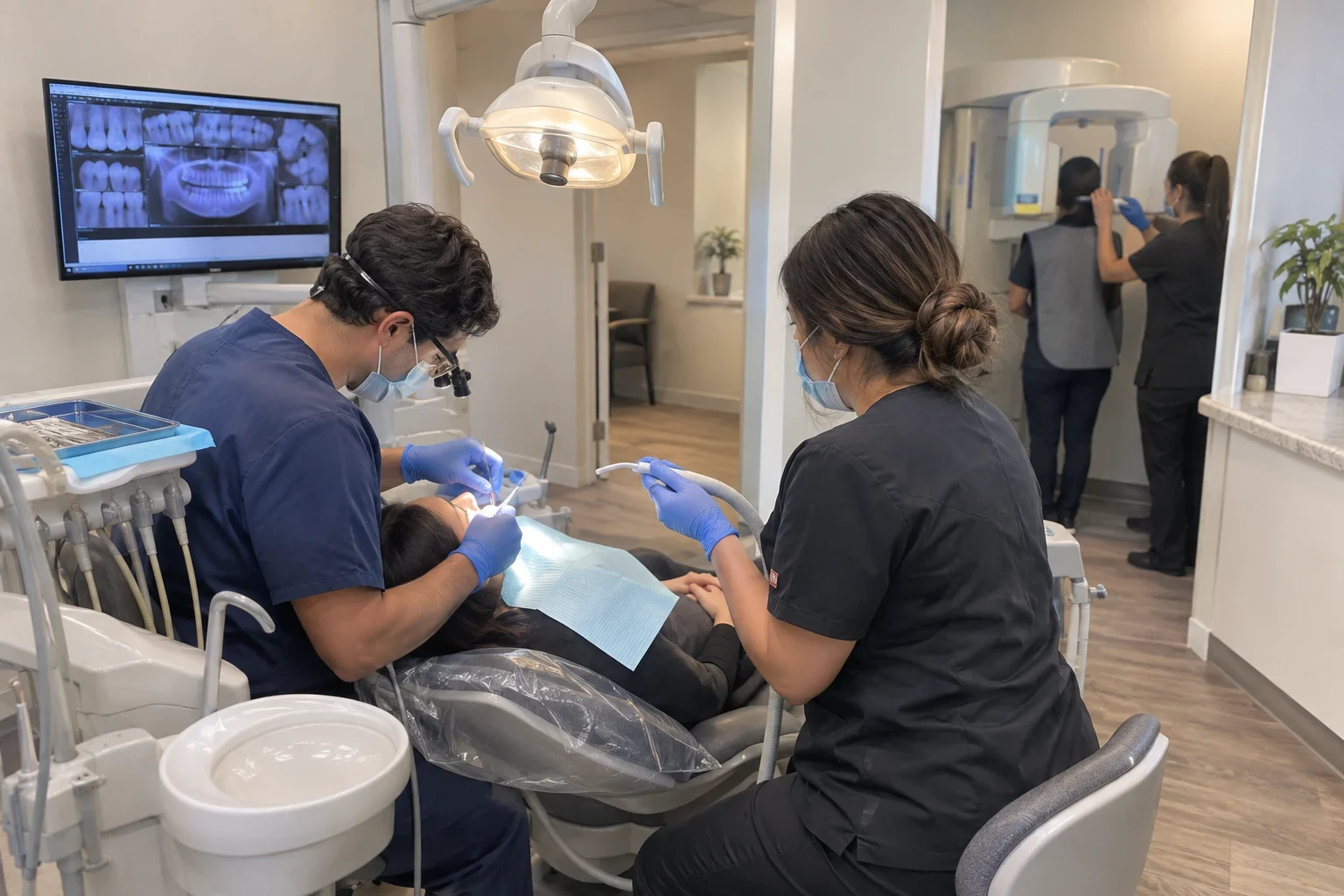
What a Root Canal Does and When It Makes Sense
At the center of each tooth sits the pulp, a soft bundle of nerve and blood vessels. Bacteria can work their way in through deep decay, a fracture or an aging filling that no longer seals. An infected pulp cannot recover by itself, and the pain tends to flare and fade until an abscess forms at the end of the root.
During a root canal we take out the damaged pulp, clean and shape the canals, then seal them so bacteria have no way back in. The tooth itself stays put, which keeps your natural bite and the bone that supports it. Many patients say it felt like a longer filling appointment, with relief arriving soon after.
Sometimes it is the wrong choice. When a crack runs below the gumline, or too little tooth remains to support a crown, we will tell you plainly and explain extractions and dental implants as the alternative. Our job is to give you a straight answer, not steer you toward one option.
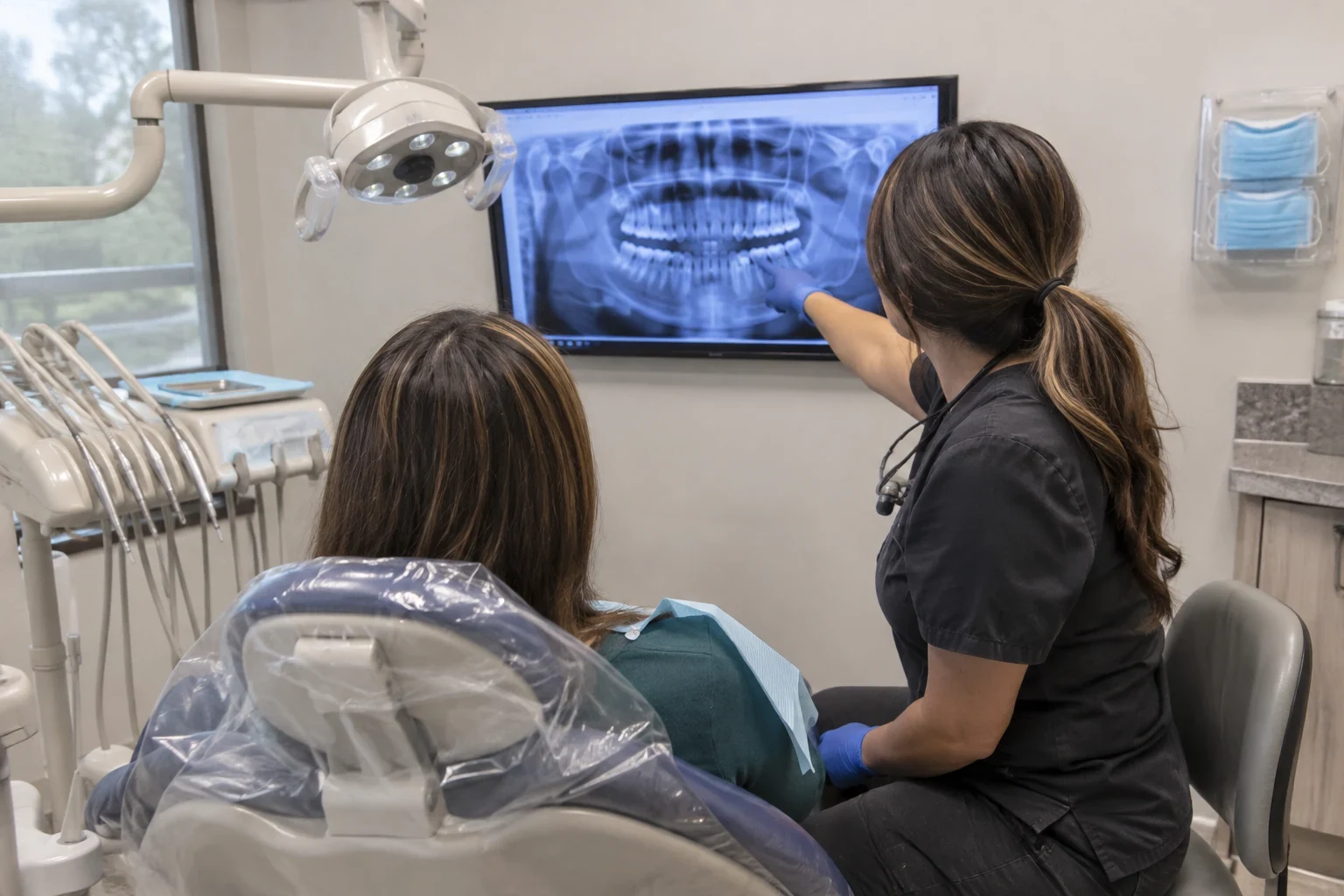
What Your Root Canal Treatment Includes
- 01
Focused exam and imaging
We check how the tooth responds to cold and tapping, then look at digital X-rays. When the roots are curved or hard to read, a CBCT scan shows us every canal before treatment starts.
- 02
Thorough numbing
Treatment does not begin until the tooth is fully numb. If you feel anything along the way, lift your hand and we stop to give you more anesthetic.
- 03
Cleaning and sealing the canals
A small rubber shield keeps the tooth isolated and dry during treatment. We clear each canal with fine instruments, rinse it clean, then fill it with a rubber-like material and seal it closed.
- 04
Temporary filling
We place a temporary filling over the opening while the surrounding tissue settles. Eating soft foods on it is fine until your permanent restoration is ready.
- 05
Crown planning
A back tooth treated with a root canal gets more brittle over time. We plan your crown from the very first visit so the tooth is protected for the long run.
Questions about Root Canals?
Call(972) 635-4707When a Toothache Points to a Root Canal
An ache that stays after hot or cold drinks
A quick zing that fades in seconds is usually nothing serious. If the ache hangs on long after coffee or ice water, the nerve inside is often inflamed.
Throbbing that wakes you up
A deep, pulsing ache that worsens at night or when you lie down is a classic sign of infection inside the tooth.
Pain when you bite down
When chewing on one particular tooth hurts, the inflammation may have spread to the tissue around the root tip.
A pimple or swelling on the gum
A small bump that drains, or puffiness next to one tooth, usually points to an abscess. It needs treatment even if the pain eases.
A tooth turning gray or dark
A tooth that changes color months or years after an injury may have a dead nerve, sometimes with hardly any pain at all.
How Your Root Canal Visit Goes
- 1
Your evaluation
We look at the tooth and your images, then tell you if a root canal, a crown or a different option fits best. You leave with a written treatment plan and the cost explained clearly.
- 2
Getting comfortable and numb
The people caring for you on treatment day are the same ones you met at your evaluation. After the anesthetic goes in, we wait until the tooth is completely numb and ask how you feel before starting.
- 3
Treating the canals
Most root canals are done in one appointment of about one to two hours, depending on the tooth. A molar with three or four canals simply takes more time than a front tooth with one.
- 4
Recovery and your crown
Expect some tenderness for a few days, which most patients handle with over-the-counter pain relievers. At your crown appointment you will see familiar faces again.
What Affects the Cost of a Root Canal
Every tooth has its own shape inside, so we price your root canal after we have studied the X-rays. You see the full cost in writing before treatment begins, with the crown included when your tooth needs one. The number we agree on is the number you pay for that plan.
- Which tooth
- A front tooth typically has a single canal. Premolars and molars can have two, three or four, and each extra canal adds time to clean and seal, which raises the price.
- First treatment or retreatment
- If a tooth that already had a root canal becomes infected again, we first remove the old filling material before the canals can be cleaned a second time. That added step makes retreatment a bigger appointment.
- The crown afterward
- Most back teeth need a crown to stand up to daily chewing. It goes into your treatment plan at the start, so you are not surprised by a second bill later.
- Insurance and payment options
- We are in-network with 15+ major PPO dental insurance plans, and patients without insurance can use our In-house Membership Plan. We also offer 0% interest financing for up to 24 months, and checking for preapproval has no impact on your credit score.
Root Canal Questions We Hear Most
Is a root canal painful?
Once the anesthetic has done its job, most patients feel pressure and vibration rather than pain, much like a long filling. The sharp, throbbing pain people dread is caused by the infection, and treatment is how it stops. Some soreness around the tooth for a few days is normal.
Can I go back to work after my appointment?
Most patients return to work or school the same afternoon. Your lip and cheek may stay numb for a few hours, so wait to eat until feeling comes back. Chew on the other side of your mouth until the crown is in place.
Do I really need a crown after a root canal?
For molars and premolars, almost always. A treated back tooth dries out over time and becomes brittle, and the pressure of chewing can crack it. Some front teeth do fine with a filling, and we will let you know which applies to you.
Should I save the tooth or pull it and get an implant?
If the tooth is solid and the surrounding bone and gum are healthy, saving it is often the simpler and less costly route. When it is cracked through or too little structure is left to hold a crown, removing it and placing dental implants may serve you better. We walk through your images together and explain the tradeoffs, then you decide.
What if the pain stops on its own?
When a toothache suddenly goes quiet, it usually means the nerve has died, not that the problem is gone. The infection can keep spreading around the tip of the root without any warning. It is worth getting the tooth checked even if it feels fine today.
Find Out If Your Tooth Can Be Saved
A quick look and the right images tell us a lot. Call to schedule your evaluation, and you will meet the small team who will care for you through treatment and your crown.