ServicesExtractions
Tooth Extractions in Prosper
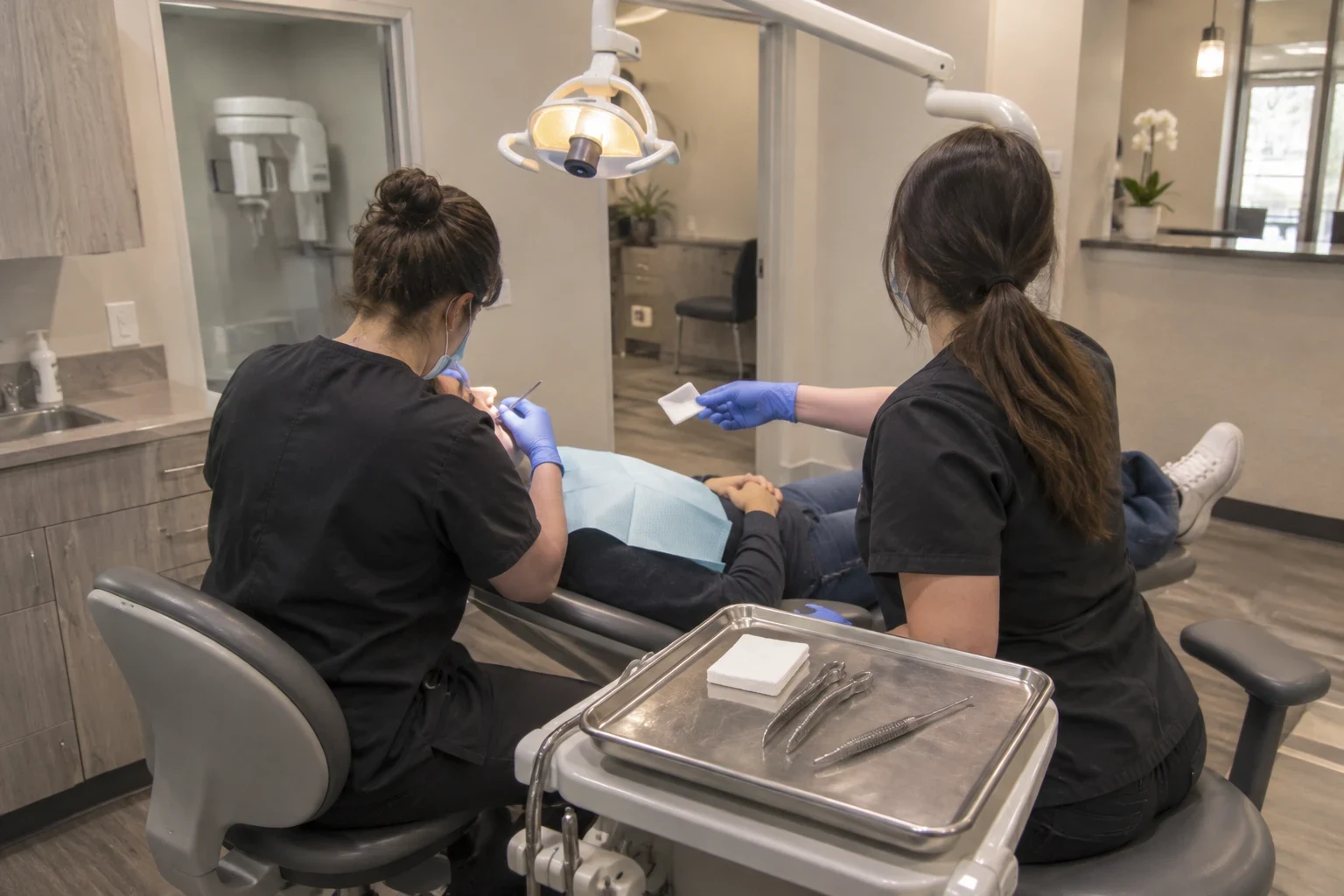
A tooth that is cracked, badly decayed or loose can make every meal hurt. We take it out gently, with thorough numbing and the same small team from your first visit through your follow-up. Then we help you decide what replaces it.
Why We Sometimes Recommend Taking a Tooth Out
Saving a natural tooth is always our starting point. When a root canal and a crown can keep it chewing for years, we will say so plainly. Some teeth have gone too far for that. The tooth may be split down into the root, loosened by advanced gum disease or so decayed that a filling or crown has nothing to hold. Holding on to a tooth like that usually brings more pain and a higher chance of infection.
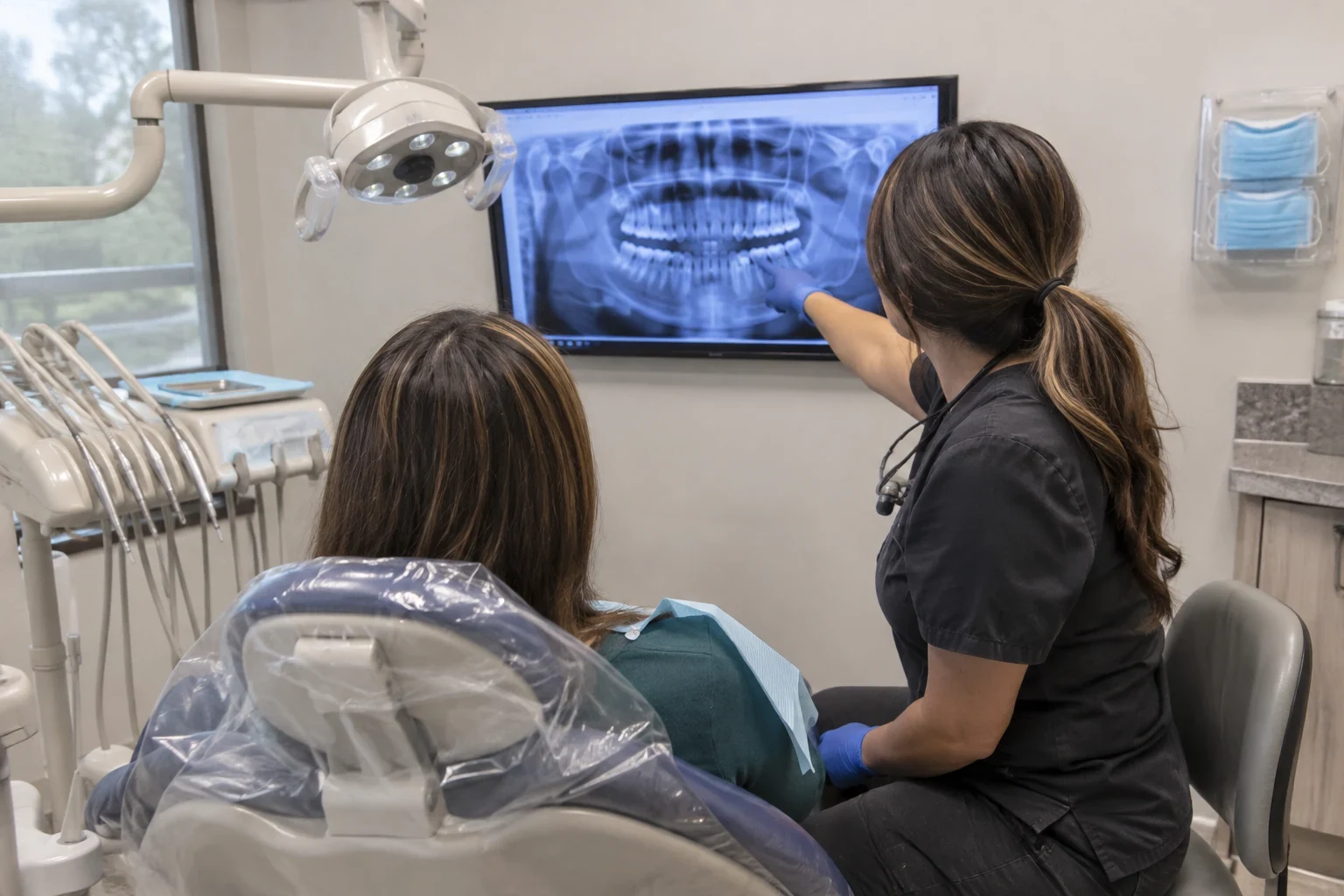
We never suggest an extraction without looking first. We review digital X-rays and, when we need to see the bone and nearby nerves more clearly, a CBCT scan. You look at the images alongside us and hear our reasoning in everyday language. Taking time to decide is completely fine.
Plenty of our patients drive in from Frisco, Celina, McKinney and the surrounding area. We keep our team small by choice. The dentist and assistant who plan your extraction are the same two people with you on the day, and the same ones who check on your healing later.
What Your Extraction Visit Includes
- Imaging and a written treatment plan
- We study your X-rays, plus a CBCT scan when it helps, to see the root shape and the bone around it. You leave with a treatment plan that spells out each step so nothing catches you off guard.
- Thorough numbing
- We numb the area completely and check it before we begin. Pressure is normal, sharp pain is not. If you feel any, let us know and we pause and add more.
- Simple and surgical removal
- Most teeth lift out whole with slow, gentle movement. When a tooth has fractured or its roots bend, we may open the gum slightly or take the tooth out in pieces, which tends to protect the surrounding bone.
- Aftercare you can follow
- We walk you through gauze, rest, soft foods and what to skip while the clot forms, and you go home with written instructions too.
- A look ahead to tooth replacement
- If the gap will affect chewing or your smile, we talk through dental implants, a bridge or dentures before the extraction, so the site heals in a way that keeps those options open.
Signs an Extraction Could Be Next
A split that reaches the root
A crack that stops above the gum can often be held together with a crown. Once it travels into the root, the tooth can't be sealed and tends to keep getting infected.
Decay that has hollowed the tooth
When very little healthy tooth remains, a filling or crown has nothing firm to anchor to.
A tooth that shifts when you chew
Movement caused by advanced gum disease means the bone holding the tooth has worn away. Removing it keeps the infection from reaching the teeth next to it.
Swelling or a gum bump that keeps returning
A small bump that drains and comes back usually signals an abscess. A root canal can clear some of these, while others are safer to treat by removing the tooth. We will be clear about which applies to you.
Pain that returns after treatment
A tooth that still hurts after a root canal may hide a fracture. Imaging helps us track it down.
What Shapes the Price of an Extraction
You see the price in your treatment plan before we begin anything. The cost mostly depends on the tooth itself and how much care it takes to remove it safely. Our office is in-network with 15+ major PPO dental insurance plans. For patients with no dental coverage, our In-house Membership Plan is another option, and 0% interest financing is available for up to 24 months, with no credit score impact to check for preapproval.
Straightforward or surgical
An intact tooth that sits fully above the gum comes out faster, so it costs less than one broken off at the gumline or one that needs a small incision.
How the roots are shaped
Long, curved or multiple roots take more time and a slower hand, especially when they sit near the sinus or a nerve.
Active infection
With an abscess, the socket may need extra cleaning, or you may need a prescription before the tooth comes out.
Planning ahead for a replacement
When dental implants are part of your plan, preserving the bone at the site can add a step. We explain why it helps and what it costs before you decide.
How the Day Goes
- 1
Check-in and a quick review
We confirm your health history and medications, recheck the images and answer any last questions. You know exactly which tooth we are treating and why.
- 2
Numbing and comfort
We apply a topical gel, then the local anesthetic, and give it time to work. Blankets, headphones and breaks are yours to ask for.
- 3
Removing the tooth
Most simple extractions take only a few minutes once you are numb. We clean the socket, and place stitches if the site needs them.
- 4
Gauze, instructions and the ride home
You bite on gauze while we go over aftercare. Most patients drive themselves home after a simple extraction with local numbing.
- 5
Follow-up with the same team
We check the site about a week later, or sooner if you have concerns. If an implant is in your plan, we map out the timing at that visit.
Extraction Questions Patients Ask
Will it hurt?
Once you are fully numb, most patients feel pressure and some pushing, but not pain. Expect some soreness for a few days afterward. Over-the-counter pain relievers handle it for most people, and we tell you which ones are safe with the medications you already take.
How long does healing take?
Most patients feel the gum settle within one to two weeks. The bone underneath keeps rebuilding for several months. Rest the first day, stick to soft foods, and skip straws and smoking so the clot stays in place.
Why am I told to avoid straws after an extraction?
Suction can pull loose the blood clot that protects the socket. If that clot comes out, the bone underneath is exposed and a strong, throbbing ache usually starts two or three days later. Smoking and forceful spitting carry the same risk. If the ache shows up anyway, phone us and we will rinse the area and place a soothing medicated dressing.
Should I replace the tooth after it comes out?
That depends on which tooth it is. When a back tooth is missing, its neighbors can lean into the gap and the opposing tooth can drift, which slowly changes your bite. We talk through dental implants, bridges and dentures with you so you can choose what fits your mouth and your budget.
Is wisdom tooth removal the same thing?
It is one type of extraction, but impacted wisdom teeth often sit partly in the bone and need a different approach. Our Wisdom Teeth Removal page explains how we handle those.
Find Out If the Tooth Can Be Saved
The $25 focused evaluation starts with a careful exam and digital X-rays, and we add a CBCT scan if your case calls for one. Then we sit down with you, go over what the images show and put your treatment plan in writing. The answer comes from the same people who would do the work.